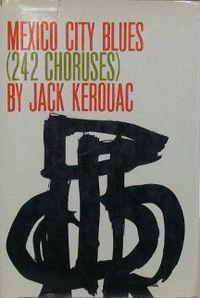
But that's where I got all my poetry out of, "Mexico City Blues." Did you ever read this? Sure. Book. It's my favorite. Yeah, I read this.
My good friend Dave Whitaker gave me a copy of this book. When? In Minneapolis in 1959. Uh-huh.
I remember when David gave me this book, it just blew a hole in my mind. Really? Yeah. "What's been buried in the grave? Dust." "Perfect dust."
"Perfect dust in time." He wrote a lot about being dead. "Once I went to a movie at midnight, 1940.
'Of Mice and Men,' the name of it, the red block boxcars rolling by on the screen. Yes, sir, life finally gets tired of living.
On both occasions, I had wild face looking into lights of streets where phantoms hastened out of sight into memorial cello time." Oh, yeah.
Here's one. "Dead and don't know it. Living and do. The living have a dead idea. A person is a living idea.
After death, a dead idea. When rock becomes air, I will be there." "I will be there." He's here. Yeah, this is where he is. Yeah. The rock has become air. Yeah.
Let's sit down a minute. Well, let's- Relax. "What's been buried in the grave? Dust." "Perfect dust."
"Perfect dust in time."
He wrote a lot about being dead. "Once I went to a movie at midnight, 1940. 'Of Mice and Men,' the name of it, the red block boxcars rolling by on the
screen. Yes, sir, life finally gets tired of living. On both occasions, I had wild face looking into lights of
streets where phantoms hastened out of sight into memorial cello time." Oh, yeah. Here's one. "Dead and don't know it. Living and do.
The living have a dead idea. A person is a living idea. After death, a dead idea. When rock becomes air, I will be there."
"I will be there." He's here. Yeah, this is where he is. Yeah. The rock has become air. Yeah.
しかし、そこが私がすべての詩を「Mexico City Blues」から取り出した場所です。これを読んだことがありますか?はい、承知しました。本。私のお気に入りです。はい、これを読みました。
しかし、そこが私がすべての詩を「Mexico City Blues」から取り出した場所です。これを読んだことがありますか?はい、承知しました。本。私のお気に入りです。はい、これを読みました。
Bob Dylan reading from Jack Kerouac's On the Road. Published on this day in 1957. Talking about Slim Gaillard and then playing his song How High the Moon. From Theme Time Radio Hour episode—Moon. Tonight on Earth—September 5, 2025. @bobdylan and his band play in Bangor, Maine.
Bob Dylan reading from Jack Kerouac's On the Road. Published on this day in 1957. Talking about Slim Gaillard and then playing his song How High the Moon. From Theme Time Radio Hour episode—Moon. Tonight on Earth—September 5, 2025. @bobdylan and his band play in Bangor, Maine. pic.x.com/noia6YJAKX
Really? Yeah. What's been buried in the grave? Dust. Perfect dust.
Perfect dust in time.
He wrote a lot about being dead. "Once I went to a movie at midnight,
nineteen forty, Mice and Men, the name of it. The red block boxcars rolling by on the screen. Yes, sir,
life finally gets tired of living.
On both occasions, I had wild face looking into lights of streets where phantoms hastened out of sight
into memorial cello time."
Dylan:'
Oh, yeah.
Here's one. "Dead and don't know it. Living and do. The living have a dead idea. A person is a living
idea. After death, a dead idea. When rock becomes air, I will be there." I will be there. He's here. Yeah,
this is where he is. Yeah.
The rock has become air.
Yeah.
Just sit down a minute. Well, this is- Relax. Yeah, it's not every day-
Dylan:
Kerouac, he honored life.
I had to read everything again that Kerouac wrote. Not that I did, but I thought about it differently.
All of a sudden, On the Road, he was talking about the road of life.
Tranquility Base here. The Eagle has landed.
Dylan:
George Bernard Shaw once said, "I don't know if there's men on the moon, but if there are, they must
be using the Earth as their lunatic asylum." Which brings me to one of my favorite crazy people.
Bully Slim Gaillard was born in Detroit, Michigan, nineteen and sixteen. He invented his own crazy child
language called
Thout. Jack Kerouac wrote about Slim Gaillard in his book On the Road.
"One night, we suddenly went
mad together
again. We went to see Slim Gaillard in a little Frisco nightclub. Slim Gaillard is a tall, thin Negro
with big, sad eyes who's always saying, 'Right-a Rooney.' And, 'How about a little Bourbon-a-Rooney?'
In Frisco, great eager crowds
of young semi-intellectuals stood at his feet and listened to him on the piano, guitar, and bongo
drums. When he gets warmed up, he really takes off his undershirt and really goes. He goes. He does
and says anything that comes into his head.
He'll sing, 'Cement mixer, putty, putty,' and suddenly slow down the beat and brood over his bongos
with fingertips barely tapping the skin as
everyone leans forward breathlessly to hear. You think he'll do this for a minute or so, but he goes right
on for as long
as an hour, making an imperceptible little noise with the tips of his fingernails, smaller and smaller all
the time till you can't hear
it anymore, and sounds and traffic come in an open door. Then he slowly gets up and takes the mic
and says very slowly, 'Great-a-rooney, fine-a-vootie. Hello-a-rooney. Bourbon-a-rooney.
All-a-rooney. How are the boys in the front row making out with their girls-a-rooney? A-rooney-vootie,
a-rooney-voutie, a-rooney-a-rooney.' He keeps this up for fifteen minutes, his voice getting softer and
softer that you can't hear.
His great sad eyes scan the audience. Dean stands up in the back and says, 'God, yes,' and clasping
his
hands in prayer and sweating. 'Sal, Slim knows time. He knows time.' Slim sits down at the piano and
hits two
notes, two Cs, then two more, then one, then two, and then suddenly the big burly bass player wakes
up from a
reverie and realizes Slim is playing C jam blues, and he slugs in his big forefinger on the string. And the
big booming beat begins, and everybody starts
rocking, and Slim looks just as sad as ever.
And they blow jazz for half an hour, and then Slim goes
mad and grabs the
bongos and plays tremendous rapid Cubana beats, and he yells crazy things in Spanish, in Arabic, in
Peruvian dialect, in
Egyptian, in every language he knows, and he knows innumerable languages. Finally, the set is over.
Each set takes two
…
CORTIC tum to TITTIE
A bourbon is slipped into his hand. 'Bourbon-a-rooney. Thank you-a-vootie.' No one knows who Slim
Gaillard is. Dean once had a dream that he was having a baby, and his belly was all bloated up
as blue. As he lay on the grass of a California hospital under a tree with a group of colored men sat
Slim Gaillard.
Dean turned the sparring eyes of a mother to him. Slim said, 'There you go-a-rooney.' Oh, Dean
approached
him. He approached his God. He thought Slim was God. He shuffled and bowed in front of him and
asked him to join us. 'Right-a-rooney,' says Slim.
He'll join anybody but won't guarantee to be there with you in spirit. Dean got a table, bought drinks,
and sat stiffly in front of
Slim. Slim dreamed over his head. Every time Slim said, 'A-rooney,' Dean said, 'Yes.' I stood there with
these two
madmen. Nothing happened. To Slim Gaillard, the whole world was just one big a-rooney."
Here's Slim
with How High the Moon.
♪
Somewhere there's music. Moon.
Stars. All the planets shine. Here they come. There they go.
Flat Foot Floogie was so popular that it was buried in the nineteen thirty-nine World's Fair time
capsule, along with Stars and
Stripes Forever and Gershwin's Rhapsody in Blue. The time capsule is set to be opened in the year
sixty-nine
thirty-nine. I wonder what they'll make of Slim Gaillard then.
The clip begins with Allen reading from Kerouac (from the conclusion of Mexico City Blues‘ “54th Chorus”)
“Once I went to a movie/ At midnight, 1940, Mice/ and Men, the name of it, the Red Block Boxcars/ Rolling by (on the Screen). Yessir/ life/ finally/ gets/ tired/of/ living -. On both occasions I had wild/ Face looking into lights/Of Streets where phantoms/ Hastened out of sight/ Into Memorial Cello Time”
AG: “Here lies one whose fame was writ in water”..writ in water, yeah, all his fame was writ in water [Editorial note – Allen, actually, mis-quotes here – his “name” was writ in water, not his “fame”]
AG: That’s number 227 – “Merde and misery” – 224 was “Great God Almighty/, What’s to be done”. And (231st Chorus) – “Dead and don’t know it,/Living and do/ The living have a dead idea ./ A person is a living ice;/after dear, a dead idea./ The idea of living is the same/as the idea of death./ The dead have a living idea – Dead, it aint my fault/I was only an idea – / Respected penitence in a shack/dedicated to the study of Origin -/ The good Buddha-material/is not a sin-cloth -/Cloth of Light -/ Beings alive indicatte death/by their jaunty work/Just as the dead indicate the living/by their silence/ When rock becomes air/ I will be there.” –
But one night we suddenly went mad together again; we went to see Slim Gaillard in a little Frisco nightclub. Slim Gaillard is a tall, thin Negro with big sad eyes who’s always saying, “Right-orooni” and “How ’bout a little bourbon-orooni.” In Frisco great eager crowds of young semi-intellectuals sat at his feet and listened to him on the piano, guitar, and bongo drums. When he gets, warmed up he takes off his shirt and undershirt and really goes. He does and says anything that comes into his head. He’ll sing “Cement Mixer, Put-ti Put-ti” and suddenly slow down the beat and brood over his bongos with fingertips barely tapping the skin as everybody leans forward breathlessly to hear; you think he’ll do this for a minute or so, but he goes right on, for as long as an hour, making an imperceptible little noise with the tips of his fingernails, smaller and smaller all the time till you can’t hear it any more and sounds of traffic come in the open door. Then he slowly gets up and takes the mike and says, very slowly, “Great-orooni . . . fine-ovauti . . . hello-orooni . . . bourbon-orooni . . . all-orooni . . . how are the boys in the front row making out with their girls-orooni . . . orooni . . . vauti . . . oroonirooni . . .” He keeps this up for fifteen minutes, his voice getting softer and softer till you can’t hear. His great sad eyes scan the audience.
Dean stands in the back, saying, “God! Yes!”—and clasping his hands in prayer and sweating. “Sal, Slim knows time, he knows time.” Slim sits down at the piano and hits two notes, two Cs, then two more, then one, then two, and suddenly the big burly bass-player wakes up from a reverie and realizes Slim is playing “C-Jam Blues” and he slugs in his big forefinger on the string and the big booming beat begins and everybody starts rocking and Slim looks just as sad as ever, and they blow jazz for half an hour, and then Slim goes mad and grabs the bongos and plays tremendous rapid Cubana beats and yells crazy things in Spanish, in Arabic, in Peruvian dialect, in Egyptian, in every language he knows, and he knows innumerable languages. Finally the set is over; each set takes two hours. Slim Gaillard goes and stands against a post, looking sadly over everybody’s head as people come to talk to him. A bourbon is slipped into his hand. “Bourbon-orooni—thank-you-ovauti . . .” Nobody knows where Slim Gaillard is. Dean once had a dream that he was having a baby and his belly was all bloated up blue as he lay on the grass of a California hospital. Under a tree, with a group of colored men, sat Slim Gaillard. Dean turned despairing eyes of a mother to him. Slim said, “There you go-orooni.” Now Dean approached him, he approached his God; he thought Slim was God; he shuffled and bowed in front of him and asked him to join us. “Right-orooni,” says Slim; he’ll join anybody but he won’t guarantee to be there with you in spirit. Dean got a table, bought drinks, and sat stiffly in front of Slim. Slim dreamed over his head. Every time Slim said, “Orooni,” Dean said, “Yes!” I sat there with these two madmen. Nothing happened. To Slim Gaillard the whole world was just one big orooni.
The clip begins with Allen reading from Kerouac (from the conclusion of Mexico City Blues‘ “54th Chorus”) “Once I went to a movie/ At midnight, 1940, Mice/ and Men, the name of it, the Red Block Boxcars/ Rolling by (on the Screen). Yessir/ life/ finally/ gets/ tired/of/ living -. On both occasions I had wild/ Face looking into lights/Of Streets where phantoms/ Hastened out of sight/ Into Memorial Cello Time”
AG: “Here lies one whose fame was writ in water”..writ in water, yeah, all his fame was writ in water [Editorial note – Allen, actually, mis-quotes here – his “name” was writ in water, not his “fame”]
Bob and Allen, in 1975, in Lowell cemetery (Edson cemetery), on the occasion of a stop-over on the legendary Rolling Thunder tour, famously standing together, beside Jack Kerouac’s grave, musing, (Allen’s certainly taking the lead), in memento mori.
Allen (gesticulating towards the grave):”So that’s what’s gonna happen to you?” Dylan: “No, I want to be in an unmarked grave.”
The clip begins with Allen reading from Kerouac (from the conclusion of Mexico City Blues‘ “54th Chorus”) “Once I went to a movie/ At midnight, 1940, Mice/ and Men, the name of it, the Red Block Boxcars/ Rolling by (on the Screen). Yessir/ life/ finally/ gets/ tired/of/ living -. On both occasions I had wild/ Face looking into lights/Of Streets where phantoms/ Hastened out of sight/ Into Memorial Cello Time”
AG: “Here lies one whose fame was writ in water”..writ in water, yeah, all his fame was writ in water [Editorial note – Allen, actually, mis-quotes here – his “name” was writ in water, not his “fame”]
Photograph – Rebecca Price Butler
BD: Where’s he buried?
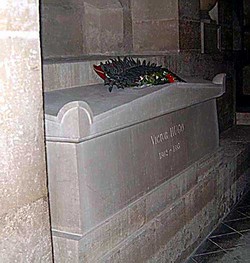
AG: He’s buried in a beautiful cemetery in Rome, the American cemetery, {Cimitero Accattolico(the A-Catholic Cemetery – the Non-Catholic Cemetery) in a Pyramid, next to (Percy Bysshe) Shelley in the Pyramid of Cestius, and not, strictly, next to Shelley, but, yes, in the cemetery, close by]
BD: We have to read this?
[The two read, in collaboration, from Kerouac’s Mexico City Blues – “. Allen begins, reading, at random, from towards the end of the “230th Chorus”]
AG: “..frozen /and sliced microscopically/ In Morgues of the North” – [Editorial note – The complete line is “Pieces of the Buddha-material frozen/and sliced microscopically/ In Morgues of the North“]
BD: “Quivering meat of elephants..”
AG: “of kindness” – [Editorial note – The complete line is “The quivering meat of the elephants of kindness/being torn apart like vultures”]
What I liked actually was (the next line) “Conceptions of knee-caps” – [Editorial note -“Conceptions of delicate kneecaps”] (and the concluding line) “Like kissing my kitten in the belly/The softness of our reward”. It’s like a Shakespeare sonnet that ends funny. He quit football because he wanted to study Shakespeare.
AG: That’s number 227 – “Merde and misery” – 224 was “Great God Almighty/, What’s to be done”. And (231st Chorus) – “Dead and don’t know it,/Living and do/ The living have a dead idea ./ A person is a living ice;/after dear, a dead idea./ The idea of living is the same/as the idea of death./ The dead have a living idea – Dead, it aint my fault/I was only an idea – / Respected penitence in a shack/dedicated to the study of Origin -/ The good Buddha-material/is not a sin-cloth -/Cloth of Light -/ Beings alive indicatte death/by their jaunty work/Just as the dead indicate the living/by their silence/ When rock becomes air/ I will be there.” –







 アレン・ギンズバーグがメキシコシティ・ブルースについて、ここから続きます


0 件のコメント:
コメントを投稿