Building Hopeful Otherworlds: Studio Chizu's Mamoru Hosoda on Scarlet, Online Dissonance and the Legacy of Superflat Monogram | Postmode
Building Hopeful Otherworlds: Studio Chizu’s Mamoru Hosoda on Scarlet, Online Dissonance and the Legacy of Superflat Monogram
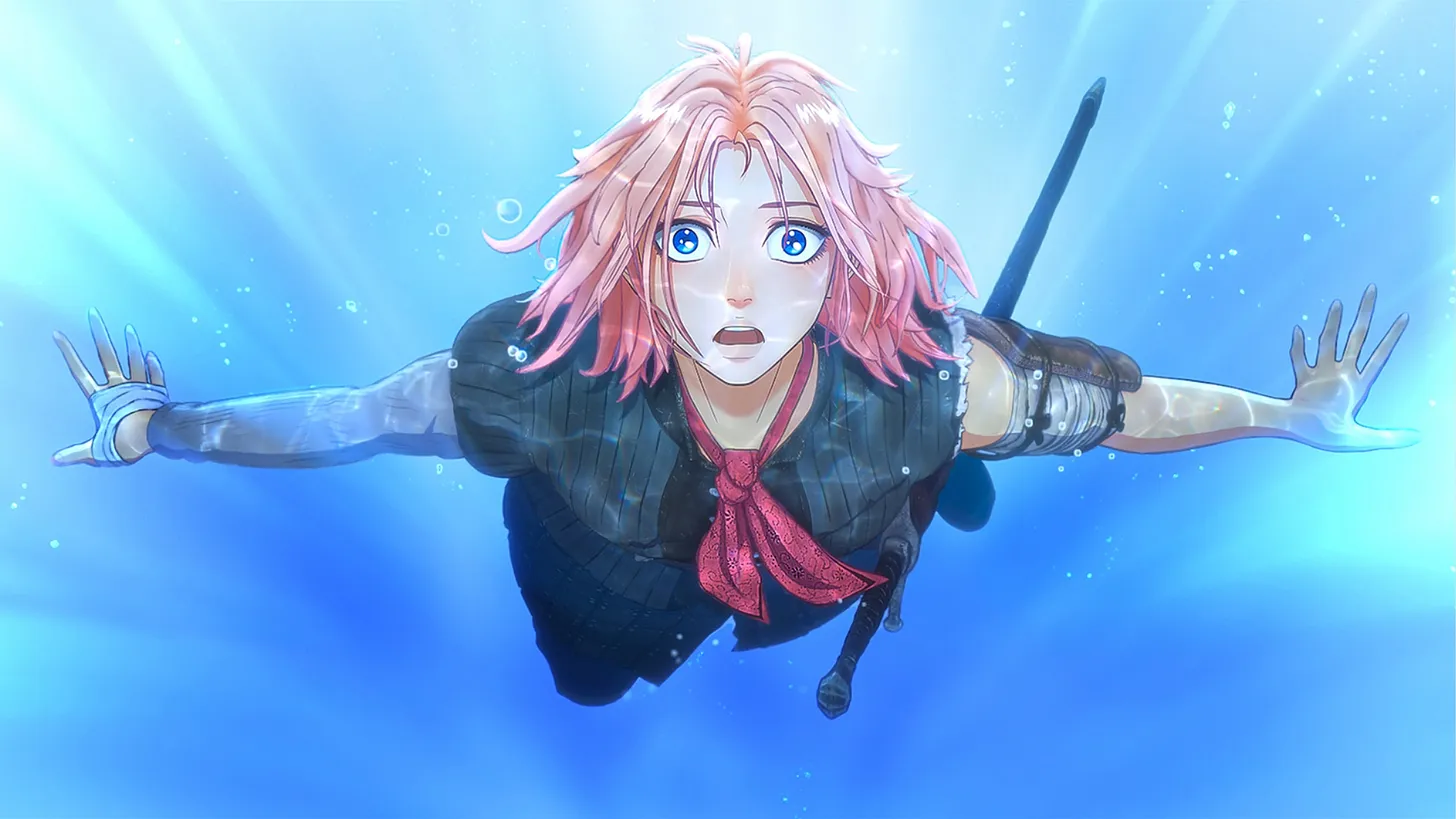
Mamoru Hosoda is an Oscar-nominated Japanese director and the co-founder of Studio Chizu, the Suginami-based animation studio responsible for some of the most ambitious original animated films of the 21st century.
From early triumphs like The Girl Who Leapt Through Time and Summer Wars, to Studio Chizu’s Wolf Children, Belle, and now Scarlet, Hosoda’s movies are connected by a commitment to the bleeding edge of visual design and a knack for offering unique perspectives on complex subject matter. They often dream of virtual spaces and the communities that inhabit them with prophetic imagination, or tell emotionally devastating stories grounded in quotidian wonder.
Hosoda’s latest film is Scarlet, a time-travelling tale of revenge which pivots away from virtual internet utopias and towards an interconnected afterlife, pulling on tragic Shakespearean threads in the process. Ahead of Scarlet arriving in UK cinemas today, March 13, I spoke to Hosoda about the making of the film, the legacy of Studio Chizu, Chloé Zhao’s Hamnet, and his turn-of-the-century work with Takashi Murakami and Louis Vuitton.
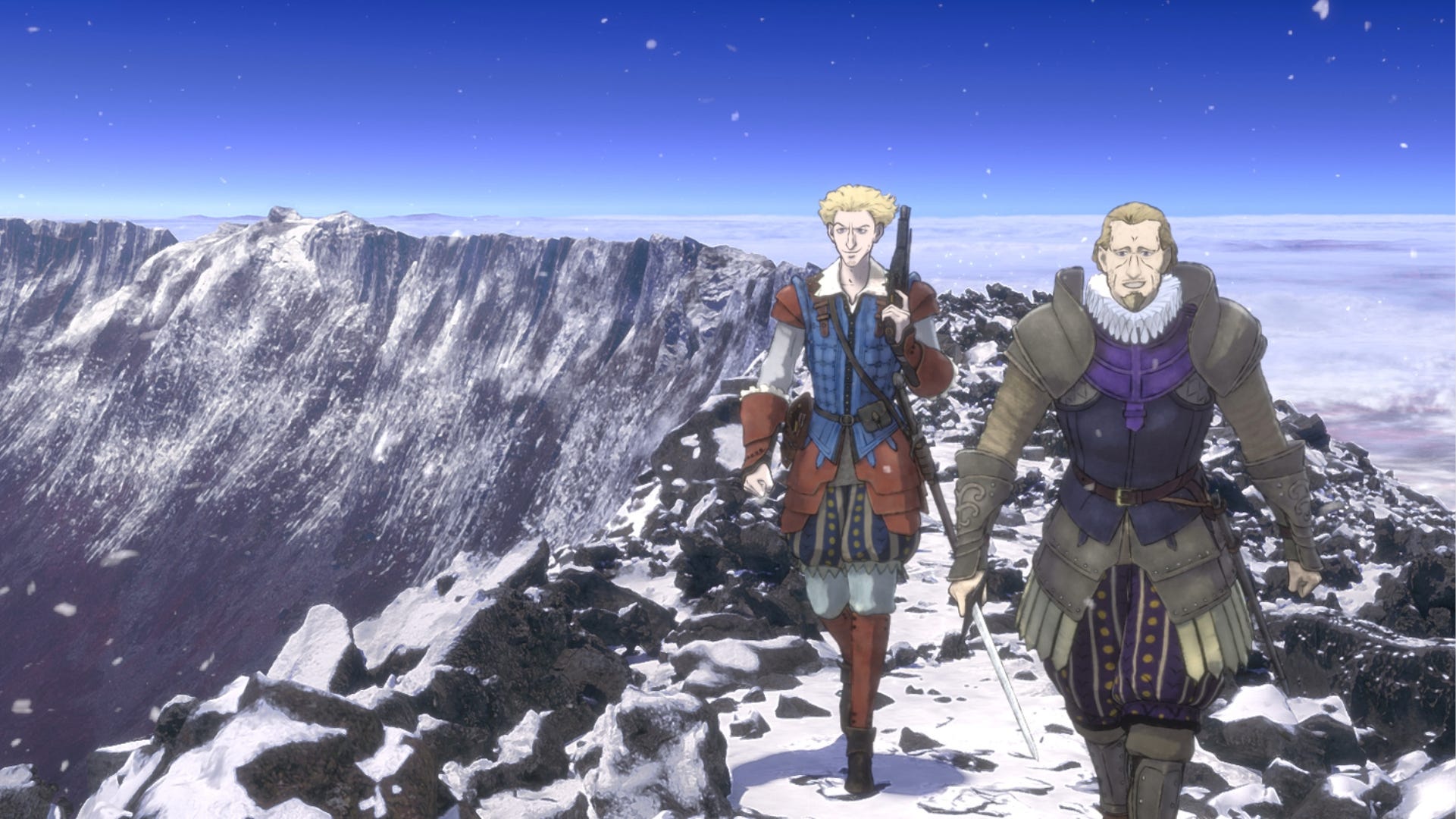
From the digital infrastructure of OZ and the VR Network of U to the shared afterlife in Scarlet, you build third spaces in your films where humanity can share in a singular culture. For example, in Scarlet’s Otherworld, we see Petra-esque landmarks alongside what looks like the crater of Mt. Yotei. Do you find something worth investigating in a world where our cultural experience is universal, rather than siloed by geography and language barriers? Is this the key to overcoming cycles of violence?
Mamoru Hosoda: I’ve always been deeply fascinated by what happens when people transcend their real-world affiliations and boundaries to share a single space. OZ, U, and even the Otherworld in Scarlet all stem from that same interest. If people who would normally be separated by geography, language, and borders could gather in one place, see the same scenery, and share the same emotions, I believe it holds the potential for a human understanding not yet realized in reality.
At the same time, I don’t simply believe that if there were a universal cultural space, conflict would cease. Even when people are looking at the same scenery, they may be carrying entirely different pain and memories, and a shared space can itself breed new forms of domination or exclusion. So what matters is not that everyone becomes the same, but that people can remain different while still inhabiting the same place. The reason memories of different civilizations and terrains are mixed together in the Otherworld is that I wanted to depict it not as a single idealized utopia, but as a place layered with the memories of humanity.
If there is a key to overcoming cycles of violence, I believe it lies in being able to imagine that the other person also carries pain, just as you do. A sort of outside “third space” may have the power to support that imagination, even if only slightly. Places like that are less utopias and more so vessels for the imagination that humanity should not let go of.
I work primarily in the interactive space, so the gorgeous aesthetic of Scarlet’s 3D Otherworld reminded me strongly of a game engine. Due to the meticulous depiction of hefty, medieval combat, my mind was soon drawn to the worlds built by From Software. When you were in the worldbuilding phase for this movie, did you draw on any influences from the world of video games, and are there particular creators or works that inspire you currently in the interactive space?
Mamoru Hosoda: I am glad to hear that, but to be honest, I myself hardly play games at all now, though I did a little when I was younger, and I do not actively keep up with game-related information. So it is not the case that I made Scarlet under the direct influence of any particular game work.
At the same time, because we are all creating works within the same era, I think it is natural that filmmakers and game creators may be moving toward shared concerns, and as a result, this can lead to works converging in some ways. For example, how do we create a space that carries a bodily sense of presence today? How do we embed the weight of violence and loss into the texture of a world? How do we transport the viewer or player into living within the world, rather than just presenting them information? Those are questions that I think film and games share.
In Scarlet as well, I wanted the Otherworld not to function merely as a backdrop, but as a place the protagonist physically passes through. In that sense, I think it is very natural that some viewers might be reminded of games. Rather than direct references, I think it is more that creators of the same era are moving toward similar horizons, and their expressions resonate somewhere along the way. I see that as something very healthy and creative.
Postmodern philosophers like Jean Baudrillard warned of a ‘hyperreality’ emerging from an abundance of simulacrums that degrades physical truth, and we can see this happening in the real world with social media and AI-generated video. Yet in your movies, I find a riposte — spaces like OZ and U are replete with resonant meaning, and often act as crucibles for the spirit. You pivoted away from the virtual in Scarlet to tackle the afterlife; is this a reaction to how online spaces have become more transient and negative in recent years? How do you feel about contemporary ‘metaverses’, versus your more utopian concepts?
Mamoru Hosoda: Around 2000, when I was making Digimon Adventure: Our War Game!, and in 2009, when I was creating OZ for Summer Wars, I still felt a sense of hope in the internet as a field of possibility. It seemed like a place where people could meet beyond physical distance and social positions. I depicted it with the hope that young people would use new tools to reshape the world in new ways.
But when I look at what online spaces have actually become, I feel that much of that hope has been betrayed. Social media has become not only an open forum for dialogue but also a place where anger, division, and instant reaction are amplified. Spaces where people were supposed to be free have, in some cases, instead exhausted them or trapped them inside shallow oppositions of friend and enemy. I believe choosing the Otherworld of Scarlet, a space entirely separate from technology, was not unrelated to this sense of dissonance with the reality of online spaces. That said, moving toward the Otherworld in Scarlet was less about abandoning virtual space and more about digging fundamentally into the question of how people face loss and death.
Many of the metaverses being discussed today are very interesting as matters of technology and economics, but I sometimes feel that the question of how the human soul changes within such spaces has been left slightly behind. What has always interested me is not the novelty of a space itself, but how human beings are changed by being there. In that sense, it is not so much that I believe in utopia, but rather that any space can become either salvation or danger depending on what humans bring into it. Perhaps someday I’ll make another film depicting virtual spaces. When I do, I want to portray a new hope for a world that has advanced even further than before.
You operate in a landscape that is saturated with franchises and remakes, yet, like Kojima Productions in the world of video games, you have consistently pursued the creation of original IP at Studio Chizu. What is so vital to you about leaving worlds behind to build new ones, and taking inspired stylistic swings — how do you find the energy to always push in that direction?
Mamoru Hosoda: I think that if you repeat the same thing too often, films quickly become safe. Of course, there is value in forms that audiences can enter comfortably and in worlds that are loved. But if the creator becomes too comfortable within that ease, then a sense of urgency begins to disappear from the work. Each time I make a film, I try to ask myself, “What have I still not seen this time?” and “Have I gone to the places I truly find frightening?”
What matters about building an original world is not simply about novelty. When you try to capture emotions or questions truly essential in this moment, existing vessels sometimes can’t contain them. With Scarlet, for example, I wanted to depict anger toward endless conflict and the difficulty of beginning to live again, apart from revenge. To contain those things, I needed a new narrative and visual vessel appropriate to them.
I think the source of my energy is something akin to dissatisfaction. There’s always this feeling that it’s not quite done yet, that it hasn’t quite reached its destination. I cannot completely erase that feeling, and it is difficult to feel satisfied. Maybe it’s that feeling that drives me to create new worlds. Of course, there is a part of me that wants to take the easier path, but I believe that unless film steps into the unknown, it cannot reveal a new landscape.
I find it poetic that two reinterpretations of the same work, Scarlet and Chloe Zhao’s Hamnet, came out in the same year, and boldly expanded our understanding of one of Shakespeare’s most famous tragedies. Have you seen Zhao’s film, and why do you think Hamlet remains such a vital tool for reinterpreting grief hundreds of years later?
Mamoru Hosoda: I saw Hamnet at the Toronto International Film Festival. It was a very memorable film, but to me it felt less like a film depicting the historical truth of Shakespeare and more of a universal work about loss and grief that could happen to any family in any era. I do not know whether that was exactly Director Chloé Zhao’s intention, but that is at least how it resonated with me.
I believe Shakespeare’s works continue to endure to this day isn’t their setting or historical context, but because the human contradictions and conflicts they portray remain unchanged. With Scarlet, I wanted to reshape those universal questions into a form that contemporary audiences could receive as their own. Is revenge justice? Or is it an act that, rather than saving people, destroys the world even further? Even when we look at the world today, the cycles of retaliation and conflict show no sign of ending. The questions posed by the classics do not belong only to the past. If anything, they feel more important now than ever.
Using the structure and spirit of Hamlet as a starting point, I aimed to create a story that would allow each audience member, across time and place, to ask themselves, “How would I choose to live?”
With Belle and Scarlet, I found your bracing new perspectives on both Beauty and the Beast and Hamlet to be eye-opening and emotionally resonant. Are there any other foundational stories or myths that you’d be interested in deconstructing in the future?
Mamoru Hosoda: There are always such stories, of course. But I do not want to recreate a classic exactly as it is. What fascinates me is the moment when, upon encountering the problems and emotions people carry in the present era, a sudden contemporary light shines into an old story. So it is less that I decide first, “Next I want to do this masterpiece,” and more so, there is a pressing question first, and then the classics resonate with that question.
What makes myths and folktales fascinating is how the fears and desires of humans for hundreds of years are embedded in them in very simple forms. Parents and children, death, love and possession, being cast out from the community, how to accept those that are different. Those themes are timeless, even when translated into the present era. Going forward, I believe there will continue to be cases where I take up a story not because it is a masterpiece, but because there is a reason it must be retold now.
You’re at a point where a new generation of creatives has grown up cherishing the work of Studio Chizu. Domee Shi paid direct homage to The Girl Who Leapt Through Time in Pixar’s Turning Red, and Porter Robinson cites Wolf Children as a major inspiration for his album Nurture — even collaborating with composer Masakatsu Takagi. Is it inspiring to see your works break through medium-based boundaries, or do you see all of these formats as refractions of the same creative language?
Mamoru Hosoda: I find it very inspiring, and at the same time, I also feel that all of these things are connected somewhere. Film, music, games, animation, all of these forms ultimately meet in the question of how they move human emotion and the sense of time. Even though the forms differ, the language of creation flowing through them might be surprisingly similar.
It makes me genuinely happy to see my work received by creators in other media and transformed into new forms. A work does not close itself off the moment it is completed. Sometimes it becomes the seed of another form of expression within someone else. In that sense, it is a wonderful thing when emotions that existed within a film go on to resonate in different ways through music, games, or another animation.
What matters, perhaps, is not crossing boundaries in itself, but whether the core emotion remains alive after crossing them. If the sense of longing or growth that existed in The Girl Who Leapt Through Time or Wolf Children can still be felt even when it takes a different form in another medium, then I believe that work is truly living beyond its original medium.
During the 2021 Tokyo International Film Festival, you held a fascinating talk with another admirer of your work, Bong Joon Ho, which touched on his upcoming animated feature, The Valley. Have you had any involvement with the project in the years since that initial connection, and do you feel the traditional borders separating live-action cinema, CGI, and hand-drawn animation have finally collapsed? Would you ever consider incorporating live-action video into your own projects, given how Scarlet dances with hyperrealism?
Mamoru Hosoda: I have not had any special involvement with Director Bong Joon Ho’s project since then. But the fact that someone like him, who has such a strong identity as a live-action filmmaker, is also earnestly trying to engage with animation is itself very inspiring. I deeply admire his vitality in crossing media boundaries.
As for the boundary between live action and animation, I no longer think it is fundamentally a technical issue. In Scarlet, I tried to unsettle that boundary from within by fusing 2D and 3D. As for incorporating live-action footage, if a story genuinely required it, then I see no reason not to do so. In the past, various people have suggested to me that perhaps I should shoot live action alongside animation. But for now, the reason I remain attached to animation is that I still feel I have not exhausted the possibilities of visualizing emotion in a way only animation can.
The recently remastered Superflat Monogram, which you directed in 2003 for Louis Vuitton and Takashi Murakami, features flip phone selfies, a social network, and an ‘otherworld’ just beyond the everyday. In 2026, it feels incredibly prophetic for how it blurred the lines between high fashion, anime, and pop culture. Looking back, do you see that project as the bedrock of your fascination with third spaces like OZ, U, and the Infinite Land in Scarlet? What is your strongest memory from working on that project?
Mamoru Hosoda: Looking back, I do think that work contained many of the questions that would later continue to pursue throughout my career. But if we are speaking of an origin point, I would have to go back one step further, to Digimon Adventure: Our War Game!, which I directed in 2000. It’s a story set inside the internet, an attempt to depict through animation another space connected to the real world. It was after seeing that work that Takashi Murakami asked me to direct Superflat Monogram. In that sense, that short film became an opportunity to revisit, through the filter of Murakami’s perspective, what I had been trying to grasp in Our War Game!.
In 2003, mobile phones were just beginning to enter everyday life, and nobody really had an answer yet as to where the boundary between reality and the virtual lay. The very combination of Murakami and Louis Vuitton was an attempt to dissolve boundaries between the elevated and the popular, Japan and France, art and commerce. That spirit overlapped in some way with what I had felt about the internet as a space when I was making Our War Game! The other world the girl wanders into in that short was depicted as a space just behind everyday life, and that connects directly to OZ, to U, and to the Otherworld in this film as well. My strongest memory from that time is the pure surprise I felt when Murakami first contacted me and I realized that my animation had reached somewhere I never would have expected. For me, it was an experience that suddenly opened up the possibilities of expression.
希望に満ちた異世界を築く:スタジオ・チズの細田真狞がスカーレット、オンライン・ディスソナンス、そしてスーパーフラット・モノグラムの遺産について語る
細田真保は、オスカー候補にノミネートされた日本人監督であり、杉上を拠点とするスタジオ「Studio Chizu」の共同創設者です。スタジオは21世紀における最も野心的なオリジナルアニメ映画のいくつかを手掛けています。
『The Girl Who Leapt Through Time』や『Summer Wars』といった初期の傑作から、Studio Chizuの『Wolf Children』や『Belle』、そして現在は『Scarlet』まで、細田の映画は、視覚デザインの最先端への取り組みと、複雑なテーマに対して独自の視点を提供する才能によって結びついています。彼らはしばしば、仮想空間やそこに住むコミュニティを予言的な想像力で夢見たり、日常的な驚きに基づく感情的に壊滅的な物語を語ったりします。
細田の最新作は『Scarlet』で、復讐の時間旅行物語であり、仮想インターネットユートピアから離れ、相互に結びついた来世へと転換し、その過程で悲劇的なシェイクスピア的糸を引き寄せます。本日3月13日、英国の映画館に『スカーレット』が到着する前に、細田氏に映画の制作、スタジオ・チズの遺産、クロエ・ザオのハムネット、そして村上隆史やルイ・ヴィトンとの20世紀初頭の作品について語りました。
Postmodeは独立しており、広告がありません。Patreonでご支援いただくか、Ko‐fiでチップをいただくか、以下のニュースレターをご購読ください。
OZ のデジタルインフラや U の VR ネットワークから、Scarlet の共有された来世まで、あなたは映画において人類が唯一無二の文化を共有できる第三の空間を構築します。例えば、Scarlet's Otherworldでは、ペトラ風のランドマークが、山陽亭のクレーターのように見えるものと共に見えます。地理や言語の壁に阻まられるのではなく、私たちの文化的経験が普遍的である世界において、何か調査に値するものを見つけますか?これは暴力の連鎖を克服する鍵ですか?
細田真夢:人々が現実の所属や境界を超えて単一の空間を共有するときに何が起こるのか、常に深く魅了されてきました。OZ、U、そしてスカーレットの異世界さえも、すべて同じ興味から生まれています。地理や言語、国境によって通常は分離される人々が一箇所に集まり、同じ風景を見て、同じ感情を共有できるのであれば、現実ではまだ実現されていない人間の理解の可能性があると私は考えます。
同時に、私は単に、もし普遍的な文化空間が存在すれば、紛争が止まると信じているわけではありません。たとえ人々が同じ風景を眺めていても、全く異なる痛みや記憶を抱えていることがあり、共有空間自体が新たな支配や排除の形を生み出すことがあります。重要なのは、すべての人が同じになることではなく、人々が同じ場所に住み続けながらも異なるままでいられることです。異世界において異なる文明や地形の記憶が混在している理由は、単一の理想化されたユートピアとしてではなく、人類の記憶が層を成す場所として描写したいからです。
暴力の連鎖を克服する鍵があるとすれば、それは相手も自分と同様に痛みを抱えていると想像できることにあると私は考えます。外部の「第三の空間」のようなものが、たとえわずかであっても、その想像力を支える力を持つかもしれません。そのような場所は、ユートピアというよりも、人類が手放すべきでない想像力の器です。
私は主にインタラクティブな領域で働いておりますので、Scarletの3D Otherworldの華麗な美学はゲームエンジンを強く思い起こさせました。重大で中世的な戦闘の綿密な描写のおかげで、私の心はすぐにFrom Softwareが構築した世界に惹かれました。この映画のワールドビルディング段階にいたとき、ビデオゲームの世界から何らかの影響を受けましたか、また、現在インタラクティブな領域であなたを鼓舞する特定のクリエイターや作品はありますか?
細田守: お聞きできて嬉しく思いますが、正直に申し上げますと、私自身は現在ほとんどゲームをしません。若い頃は少しはしていましたが、ゲームに関する情報を積極的に追いつくことはしていません。つまり、特定のゲーム作品の直接的な影響下で私がスカーレットを作ったというわけではありません。
同時に、私たち全員が同じ時代に作品を創作しているため、映画制作者やゲーム制作者が共通の関心へと向かうのは自然なことであり、その結果、作品がいくつかの点で収束する結果につながると考えます。例えば、今日、身体的な存在感を持つ空間をどのように作り出すべきでしょうか?暴力と喪失の重みを世界の質感にどのように組み込むのでしょうか?視聴者やプレイヤーを、単に情報を提供するだけでなく、どのように世界の中で生活させるのでしょうか?それらは、映画とゲームが共有していると考える質問です。
スカーレットでも、私は異世界が単に背景として機能するのではなく、主人公が実際に通過する場所として機能することを望んでいました。その点では、視聴者の中にゲームを思い出すことが自然であると考えます。直接的な言及というより、同じ時代の創作者たちが似たような地平線に向かって進んでおり、その表現がどこかで共鳴していると考えます。それは非常に健康的で創造的なものだと見ています。
ポストモダンの哲学者であるジャン・ボードリヤールは、シミュラクラムの豊富さから現れる「ハイパーリアリティ」が物理的真実を低下させると警告し、ソーシャルメディアやAI生成動画を通じて現実世界でもこの現象が見られると述べました。しかし、あなたの映画では、リポステスがあります――OZやUのような空間は共鳴する意味に溢れ、しばしば精神のるつぼとして機能します。あなたはScarletのバーチャルから転向し、来世に取り組むようになったのですね。これは、近年オンライン空間がますます一過性で否定的になっていることへの反応でしょうか?現代の『メタバース』について、あなたのよりユートピア的な概念と比べて、どのように感じますか?
細田真夢:2000年頃、デジモンアドベンチャー:アワーゲームを制作していた頃、そして2009年にサマーウォーズ用のOZを制作していた頃、インターネットが可能性の領域として希望を抱き続けていました。それは、人々が物理的な距離や社会的な立場を超えて会える場所のように思われました。若者たちが新しいツールを使って世界を新たな方法で再構築してくれることを期待して、私はそれを描きました。
しかし、オンライン空間が実際に何になったかを見ると、その希望の多くが裏切られたと感じます。ソーシャルメディアは、対話のための開かれたフォーラムであるだけでなく、怒りや分裂、そして瞬時の反応が増幅される場所にもなっています。人々が自由であるべき空間は、場合によっては、むしろ彼らを疲弊させたり、友と敵の浅い対立の中に閉じ込めたりしています。私は、テクノロジーとは全く別個の空間である「アザ・ワールド・オブ・スカーレット」を選んだことが、オンライン空間の現実との不協和感と無関係ではないと考えております。とはいえ、Scarletで異世界へ向かうことは、仮想空間を放棄することよりも、人々が喪失や死に直面する方法という問題を根本的に掘り下げることに関するものでした。
本日議論されている多くのメタバースは、技術や経済に関する事柄として非常に興味深いですが、時折、そうした空間において人間の魂がどのように変化するかという問題がやや置き去りにされていると感じます。私が常に関心を抱いているのは、空間そのものの新奇さではなく、人間がそこにいることでどのように変わるかです。その点において、私がユートピアを信じているというよりも、むしろ、人間がそれに持ち込むものによって、どの空間も救いになるか危険になるかのどちらかになるということです。いつか、仮想空間を描いた別の映画を作るかもしれません。私がそうするとき、以前よりもさらに進んだ世界に対する新たな希望を描きたいと思います。
貴方はフランチャイズやリメイクが飽和した環境で活動していますが、ビデオゲーム業界における小島プロダクションのように、スタジオ・チズでオリジナルIPの制作を一貫して追求しています。新しい世界を手に置いて新しい世界を築き、インスピレーションに満ちたスタイルのスイングを取ることが、あなたにとって何がそんなに重要なのでしょうか――常にその方向へ押し進めるエネルギーは、どのように見つけているのですか?
細田守: 同じことを頻繁に繰り返すと、映画はすぐに安全になると思います。もちろん、観客が快適に入ることができる形や、愛されている世界には価値があります。しかし、創作者がその容易さの中で過度に快適になると、作品から緊迫感が消え始めます。映画を作るたびに、私は自分に「今回まだ見ていないものは何だろうか」と問いかけます。そして「本当に恐ろしいと感じる場所に行ったことがありますか?」
独創的な世界を築くことにおいて重要なのは、単に新奇さだけではありません。この瞬間に本当に重要な感情や疑問を捉えようとすると、既存の容器ではそれらを抑えきれないことがあります。例えば『Scarlet』では、復讐とは別に、終わりなき対立に対する怒りと、再び生き始めることの困難さを描写したいと考えていました。それらを収めるためには、それらに適した新しい物語と視覚的な容器が必要でした。
私のエネルギーの源は、不満に類似したものだと思います。常に、まだ完全に仕通っていない、目的地にまだ到達していないという感覚があります。その感情を完全に消すことはできず、満足感を感じるのは難しいです。もしかしたら、その感情が私を新しい世界を創造させる原動力なのかもしれません。もちろん、私の中には楽な道を進みたいと思う部分もありますが、映画が未知へ踏み込まなければ、新たな風景を明らかにすることはできないと考えています。
Postmodeは独立しており、広告がありません。Patreonでご支援いただくか、Ko‐fiでチップをいただくか、以下のニュースレターをご購読ください。
同じ作品であるスカーレットとクロエ・ザオの『ハムネット』という同じ作品の二つの再解釈が同じ年に出版されたことは詩的だと感じ、シェイクスピアの最も有名な悲劇の一つに対する我々の理解を大胆に広げました。Zhaoの映画をご覧になったことがありますか、そして、なぜハムレットは何百年も経った後も悲しみを再解釈するための重要な道具であり続けるとお考えですか?
細田真保:トロント国際映画祭でハムネットを見ました。それは非常に印象に残る映画でしたが、私にとってはシェイクスピアの歴史的真実を描く映画というよりも、どの時代のどの家族にも起こり得る喪失と悲しみについての普遍的な作品のように感じられました。それが正確にクロエ・ザオ監督の意図だったかは分かりませんが、少なくともそれが私に響いた方法です。
シェイクスピアの作品は、設定や歴史的文脈が必ずしも変わらないため、今日に至るまで存続し続けていると考えておりますが、描かれる人間の矛盾や対立が変わらないからです。Scarletと共に、私はそれらの普遍的な質問を、現代の観客が自分のものとして受け取れる形に再構築したいと考えていました。復讐は正義ですか?それとも、人々を救うどころか、さらに世界を破壊する行為なのでしょうか?たとえ今日の世界を見ても、報復と対立のサイクルは終わりの兆しを見せていません。古典が提起する質問は、過去だけのものではありません。むしろ、彼らは今、かつてないほど重要だと感じています。
ハムレットの構造と精神を出発点として、時間や場所を超えて各観客が「どのように生きるべきか」と自問できる物語を創り出すことを目指しました。
ベルとスカーレットと共に、あなたの『美女と野獣』と『ハムレット』の両方に対する新たな刺激的な視点は、目から鱗が落ちるように、感情に共鳴すると感じました。将来的に、他に解体したいと考えている基礎的な物語や神話はありますか?
細田真蛛: もちろん、そのような話は常にあります。しかし、私は古典をそのまま再現したくありません。私が魅了されるのは、現代における人々が抱える問題や感情に直面した瞬間、突然の現代的な光が古い物語に差し込む瞬間です。ですから、まず「次にこの傑作をやりたい」と決めるというよりも、まず差し迫った質問があり、その疑問に古典が共鳴します。
神話や民話が魅力的であるのは、何百年にも及ぶ人類の恐れや欲望が、非常に単純な形でそれらに埋め込まれている点にあります。親と子ども、死、愛と所有、コミュニティから追放されること、そして異なる者たちをどのように受け入れるか。それらのテーマは、たとえ現代に翻訳されたとしても、時代を超えて永遠です。今後、私は、傑作だからではなく、今すぐ再話しなければならない理由があるという理由で物語に取り上げるケースが今後も続くと考えております。
あなたは、スタジオ・チズの作品を大切に育つ新世代のクリエイティブ世代が成長した段階にあります。ドミー・シはピクサーの『ターニング・レッド』で『The Girl Who Leapt Through Time』に直接敬意を表し、ポーター・ロビンソンはアルバム『Nurture』の大きなインスピレーションとして『Wolf Children』を挙げ、作曲家の高木正勝とまでコラボレーションしています。作品が媒体の境界を超えるのを見ることは感動的ですか、それともこれらすべてのフォーマットを同じ創造的な言語の屈折として見なすのでしょうか?
細田真保:とても感銘を受けますし、同時に、これらすべてがどこかでつながっていると感じます。映画、音楽、ゲーム、アニメーション、これらすべての形態は、最終的にそれらが人間の感情や時間感覚をどのように動かすかという問いに合います。形は異なるものの、それらを流れる創造の言語は驚くほど似ているかもしれません。
私の作品が他のメディアでクリエイターに受け入れられ、新しい形に変容されるのを見ると、心から嬉しく思います。作品は完成した瞬間に閉じません。時には、それが他者の中に別の表現形態の種になることがあります。その意味では、映画内に存在した感情が音楽やゲーム、あるいは他のアニメーションを通じてさまざまな形で共鳴することは素晴らしいことです。
重要なのは、境界線を越えること自体ではなく、むしろその核心的な感情がそれらを越えた後も生き続けているかどうかです。もし『The Girl Who Leapt Through Time』や『Wolf Children』に存在した切望や成長の感覚が、別の媒体で別の形をとってもなお感じられるのであれば、私は仕事が本来の媒体を超えて真に生きていると信じています。
2021年東京国際映画祭の期間中、あなたはご自身の作品の別の称賛者であるポン・ジュノと、彼の新作アニメ長編映画『The Valley』について興味深い講演を行いました。その最初の関係以来、プロジェクトに関わったことはありますか、そして、実写映画、CGI、手描きアニメーションを分ける従来の境界がついに崩れたと感じますか?Scarletがハイパーリアリズムで踊る様子を踏まえて、実写動画をご自身のプロジェクトに取り入れることをご検討いただけますか?
細田真室:それ以来、ポン・ジュノ監督のプロジェクトに特別な関与はしておりません。しかし、実写映画制作者としての強いアイデンティティを持つ彼のような人物が、アニメーションに真摯に取り組もうとしているという事実だけでも、非常に感動的です。私は、彼のメディアの境界を越える活力に深く敬服しております。
実写とアニメーションの境界については、もはや根本的に技術的な問題だとは思いません。Scarletでは、2Dと3Dを融合させることで、その境界を内側から揺さがすことを試みました。実写映像を取り入れることについて、もし物語が本当にそれを必要としているのであれば、そうしない理由は見当たりません。過去に、さまざまな方々から、アニメーションと並行して実写を撮影すべきかもしれないと提案されました。しかし、現時点では、私がアニメーションに執着し続けている理由は、アニメーションだけができる感情を可視化する可能性をまだ尽きていないと感じているからです。
最近リマスターされた『Superflat Monogram』は、2003年にルイ・ヴィトンと村上隆のためにあなたが監督した作品で、フリップフォンの自撮り、ソーシャルネットワーク、そして日常を超えた「otherworld」を特徴としています。2026年は、ハイファッション、アニメ、ポップカルチャーの境界が曖昧になったことが、非常に予言的に感じられます。振り返ってみると、そのプロジェクトを、OZやU、そしてScarletの無限の大地といった第三の空間へのあなたの魅力の基盤とお考えですか?そのプロジェクトに取り組んでから、最も記憶に強く覚えていることは何ですか?
細田真夢:振り返ってみると、仕事には後に私のキャリアを通じて追求し続ける多くの疑問が込められていたと思います。しかし、もし起源点について語るのであれば、さらに一歩遡って、2000年に私が監督した『デジモンアドベンチャー:アワーゲーム!』まで遡らなければなりません。それはインターネットを舞台にした物語で、アニメーションを通じて現実世界とつながった別の空間を描こうとする試みです。その作品を見た後、村上隆が私に『スーパーフラット・モノグラム』の監督を依頼しました。その点において、その短編映画は、村上の視点を通したフィルターを通じて、私が『Our War Game!』で把握しようとしていたことを再訪する機会となりました。
2003年、携帯電話は日常生活に入り始めたばかりで、現実と仮想の境界がどこにあるのかについて、まだ誰も答えを持っていませんでした。村上とルイ・ヴィトンの組み合わせは、高尚なものと大衆、日本とフランス、芸術と商取引の境界を溶かす試みでした。その精神は、私が『Our War Game』を制作していたときにインターネットを空間として感じたことと、何らかの形で重なっていました。その短編で少女がさまよう別の世界は、日常生活のすぐ後ろにある空間として描かれ、この映画ではOZ、U、そしてOtherworldと直接つながっています。あの時の最も強い記憶は、村上様が初めてご連絡をいただいたときに感じた純粋な驚きであり、私のアニメーションが予想もしなかった場所に到達したことに気付いたことです。私にとって、それは突然表現の可能性を開いた経験でした。
Postmodeは独立しており、広告がありません。Patreonでご支援いただくか、Ko‐fiでチップをいただくか、以下のニュースレターをご購読ください。


0 件のコメント:
コメントを投稿